Self-Adhesive Mesh Tape Rewinding and Cutting: Key Machine Selection Questions
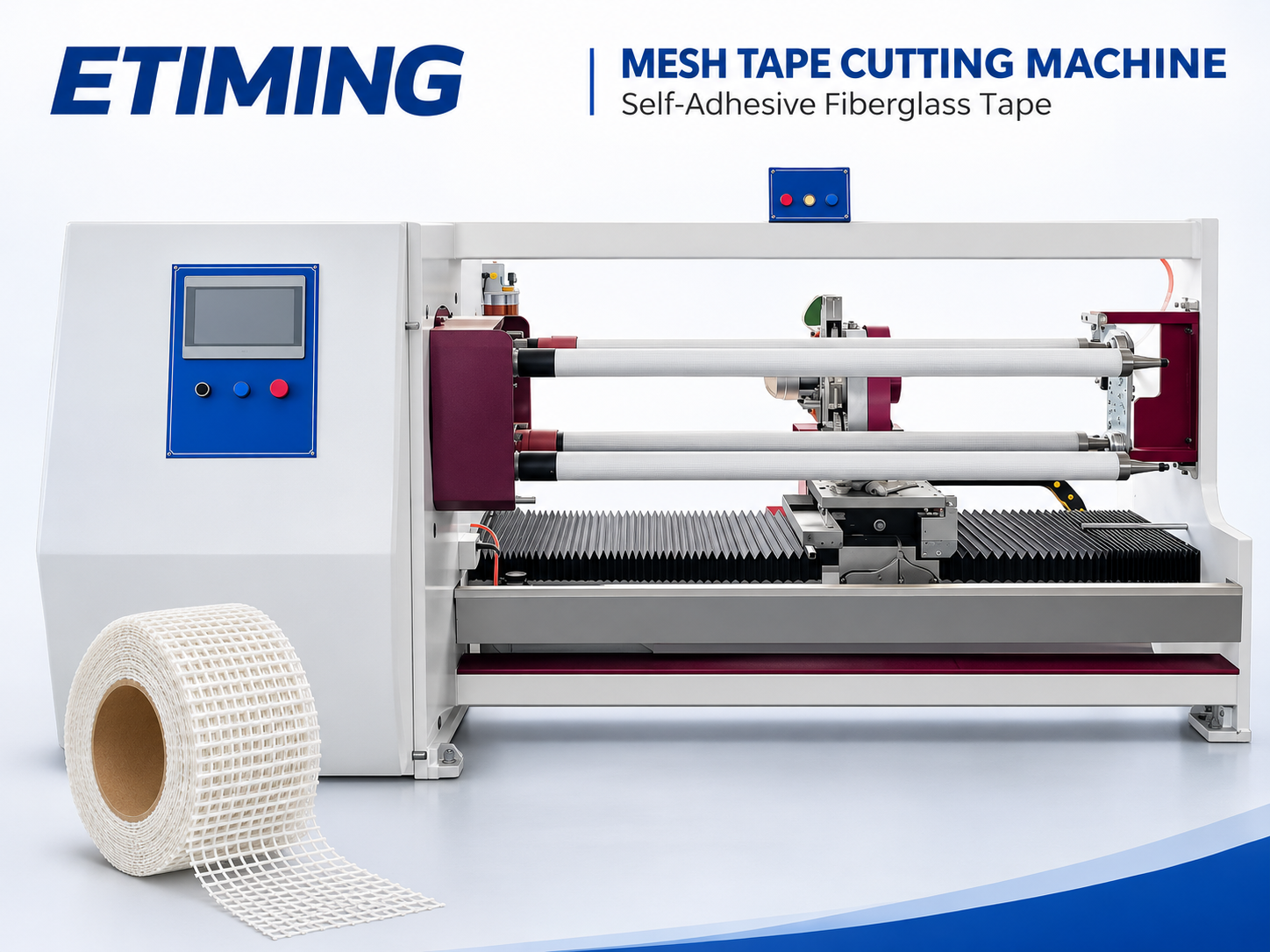
Self-adhesive fiberglass mesh tape is commonly used for drywall joints and wall repairs. Converting incoming material into finished rolls of different widths and lengths requires coordinated rewinding, log cutting and finished-roll inspection.
Comparing machine speed or minimum cutting width alone does not establish whether equipment suits a product. First define the material construction, finished-roll specifications and acceptance criteria, then confirm the rewinder and log cutter configuration.
1. Identify the Mesh Tape Being Processed
This guide concerns self-adhesive fiberglass mesh tape for drywall applications, also commonly described as drywall joint tape.
The material combines an open mesh structure with an adhesive layer. ADFORS lists drywall joints, finishing and crack repair among the uses of its FibaTape product, and explains that the tape still needs to be embedded in joint compound. Self-adhesion helps position the tape; it does not replace the complete joint-finishing process.[1]
Provide the equipment supplier with photos and actual samples rather than relying on the name “mesh tape.” Include mesh construction, thickness or weight per area, adhesive details and incoming-roll condition in the trial requirements.
2. Understand the Roles of the Rewinder and Log Cutter
In a rewinding-and-log-cutting workflow, the machines perform different tasks.
The rewinder prepares rolls for downstream processing, controlling target length, diameter and winding condition. The log cutter cuts the rewound logs to the specified finished-roll width.
Review the following conditions together:
• Working width: is the incoming width within the machine’s permitted range?
• Core size: are the core inside diameter and clamping arrangement compatible?
• Roll diameter: can the downstream cutter process the rewound diameter?
• Roll weight: are loading, support and handling arrangements suitable?
• Finished-roll specifications: are width, length and outside diameter clearly defined?
A rewinder’s maximum rewind diameter is not automatically the log cutter’s permitted processing diameter. Confirm both machines against the same finished-roll requirements.
3. A Material Trial Must Check More Than Whether the Log Can Be Cut
Cutting through the roll is only part of verification. Use the actual incoming material to complete rewinding, cutting and finished-roll unwinding checks. Retain the associated samples and records.
Winding condition: inspect roll edges for misalignment, loose winding, local compression or deformation. Compare the beginning of the roll with the condition near the target length.
Cut edges and mesh integrity: check for rough edges, fraying, loose fibers and mesh damage. Judge tooling and processing settings from trial results with the intended material.
Specification consistency: agree how width, length and appearance will be measured and accepted. One visually acceptable sample does not establish conformity across a production batch.
Finished-roll unwinding: check for abnormal blocking, stretching, deformation or loose rolls. Finished rolls should satisfy subsequent packing, transport and use requirements as well as appearance requirements.
4. Why Ordinary Tape Settings Cannot Simply Be Reused
A machine’s ability to process one tape does not establish that the same speed, tension and tooling settings can be used with a different mesh material.
Verify rewinding and cutting results using the actual self-adhesive mesh tape before confirming operating conditions. Maximum mechanical speed, maximum roll diameter and minimum cutting width are selection checkpoints, not production guarantees for every material.
List masking tape, double-sided tape or roofing waterproof tape separately if they are also required. Roofing aluminum-foil butyl tape has a different construction from drywall fiberglass mesh tape; its processing conditions need a separate suitability review.
5. Include the Finished Product’s Intended Use
Finished-roll requirements should match the target market and customer application.
USG’s technical white paper explains that joint tape and compound combinations affect joint performance, and specifies setting-type compound for the fiberglass tape systems it discusses. Check the installation instructions for the particular product rather than promising compatibility with every joint-finishing system solely because a tape is self-adhesive or made from fiberglass.[2]
For converters, an equipment inquiry should therefore cover intended use, customer acceptance requirements and packaging as well as dimensions. This helps align equipment selection with the final delivery requirements.
6. Information to Prepare Before Requesting a Quotation
Provide the following information together to reduce repeated clarification:
• Incoming material: photos, samples, web width, roll diameter, core inside diameter and roll weight.
• Material construction: mesh thickness or weight per area, adhesive details and current roll condition.
• Finished product: width, length, outside diameter, core size and packaging.
• Production plan: target output, main roll formats and changeover frequency.
• Acceptance criteria: width variation, roll length, cut edges, end-face appearance and unwinding performance.
If specifications are not yet complete, begin with existing samples and photos of the intended finished product, then confirm the details individually.
ETIMING Custom Equipment for Self-Adhesive Mesh Tape
ETIMING can help coordinate the selection and material trials of a mesh tape rewinder and four-shaft automatic log cutter based on the actual incoming material and finished-roll requirements.
These are custom versions for self-adhesive mesh tape. Specifications shown on the product pages are for reference only. Final configuration, processing range and production performance are subject to material trials, finished-roll requirements and the agreed technical specification.
Send material photos, incoming-roll specifications and target finished-roll dimensions to start an equipment discussion based on your actual product.
Related Equipment