Small-Batch Custom Printed OPP Tape: Balancing Cost and Print Quality
Why do some suppliers decline small orders for logo-printed sealing tape, while others set a high minimum or quote a much higher price per roll than plain tape?
Custom printing requires plates, press setup and a production run. These preparations do not shrink in direct proportion to order quantity. Small-batch sourcing means meeting your needs within an acceptable total spend while avoiding excess inventory.
This article covers self-adhesive carton sealing tape with an OPP film backing, commonly BOPP sealing tape.
1. A Smaller Order Can Cost Less Overall but More per Roll
Plain tape can be purchased from stock. Custom tape requires production for your artwork. A first order may include artwork preparation, plate making and press setup. Fewer rolls mean a larger share of those costs per roll.
Compare both:
• Cost per roll: check that width, length, thickness and printing conditions match.
• Total order spend: add tape, plate charges and freight.
If usage is uncertain, buying a small quantity at a higher unit price may suit you better than holding excess stock. Once usage and artwork are stable, compare the savings at higher order volumes.
2. Understand the Print-Quality Trade-Off in Small-Batch Photopolymer Printing
For the small-batch option discussed here, photopolymer plates can be used to print a logo, text or repeating pattern on the film surface.
Photopolymer plates are a type of flexographic plate. Flexography and gravure differ in their plates and printing methods; whether the ink is on the surface does not distinguish the two.
First check whether your brand name and logo are legible and achieve the intended appearance on the carton. Fine text, delicate lines, complex gradients or precise multicolour registration require further assessment. This small-batch option should not be promised to match fine-detail gravure results.
Gravure can reproduce finer artwork, but plate investment and production arrangements also belong in the budget. For a very small order, the extra spend may not fit the actual need.
A small-batch option requires acceptance of both its unit cost and its achievable print result.
3. Why Can Quotes Differ for the Same Number of Logo-Printed Rolls?
Artwork matters as well as quantity.
Number of colours. Single-colour text and multicolour artwork have different separation, plate and registration requirements.
Ink coverage. Small, spaced logos differ from large printed backgrounds or full-coverage patterns in ink use and production requirements.
Repeat layout. Confirm logo size, orientation, repeat spacing and position relative to the tape edges before plates are made.
Artwork quality. Vector files are easier to prepare. Screenshots or low-resolution images may need redrawing or simplification.
Send the artwork with your enquiry. A request for a small quantity with a blue logo is not enough for an accurate quotation.
4. Assess Clear, White and Coloured Tape on Your Carton
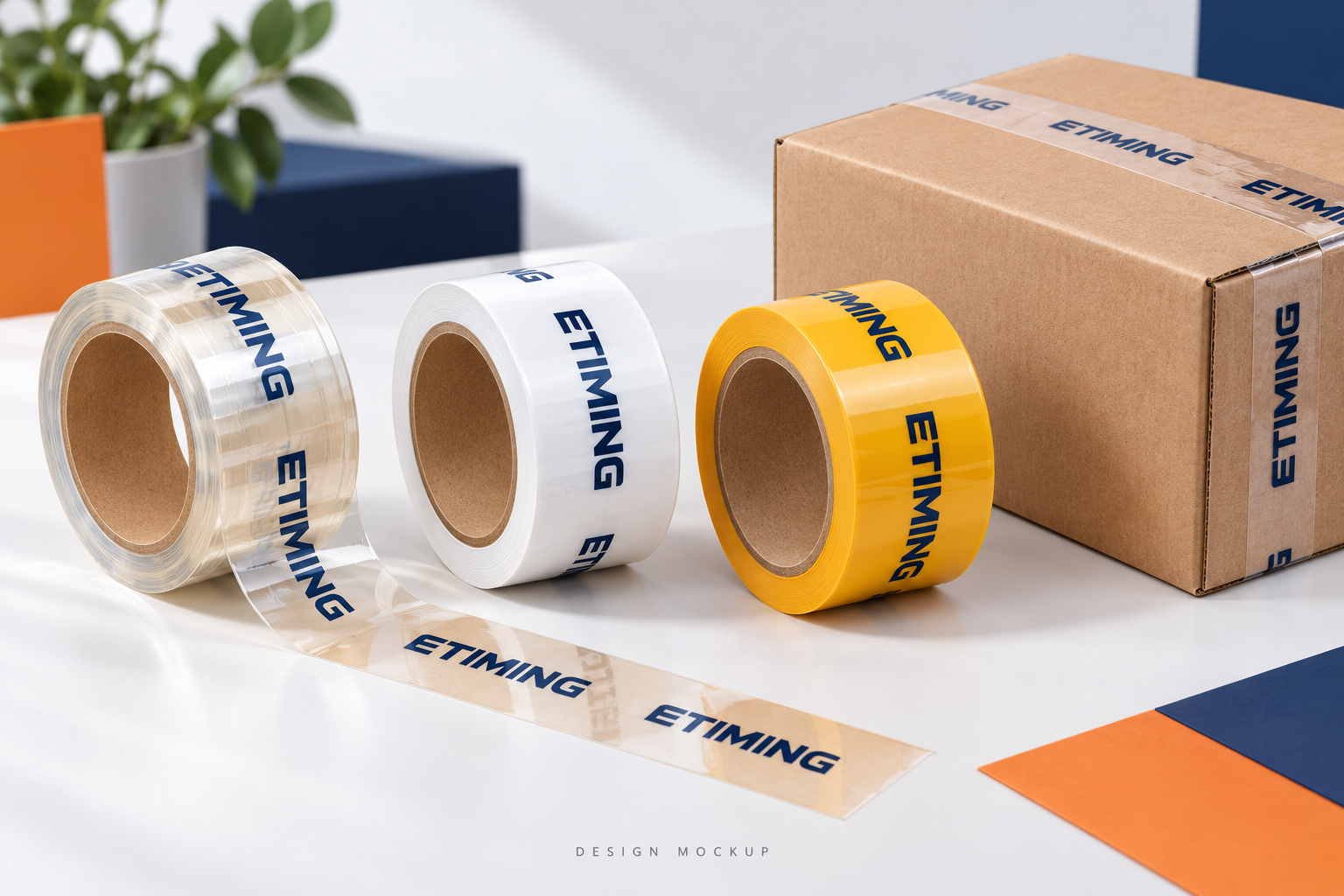
Unprinted areas of clear tape reveal the carton underneath. The same logo can look different on brown and white cartons; light colours and fine lines need particular attention to legibility.
White or coloured tape creates a more visible sealing strip, but contrast still needs checking. Also distinguish a coloured tape backing from a large background created by printing. Their production requirements are not interchangeable.
A digital mockup confirms the design; it cannot replace assessment of the physical print result.
5. Clarify First-Order and Repeat-Order Charges
Before ordering, ask:
• Will unchanged artwork incur another plate charge, and how long are plates retained?
• Do changes to text, logo or layout require new plates?
• Is there still a minimum production quantity for reorders?
If your branding is still evolving, limit contact details or promotional text that may soon change. Otherwise, a redesign can leave you with unusable stock.
6. The Tape Must Seal Well as Well as Look Right
Confirm print appearance and sealing performance separately. Describe the carton surface, package weight, storage and transit conditions, and whether sealing is manual or by machine.
Check samples on your actual cartons in your normal packing process, rather than judging only the artwork on the roll.
Provide quantity, width, length per roll, background colour, artwork, print colours, application method and destination. State whether you accept small-batch photopolymer printing so suitability can be assessed promptly.
ETIMING can help review sourcing options against these details. Minimum order quantity, print result, charges and lead time are confirmed after artwork and specification review.

