Why High Tape Slitting Speed Does Not Always Mean Higher Daily Output
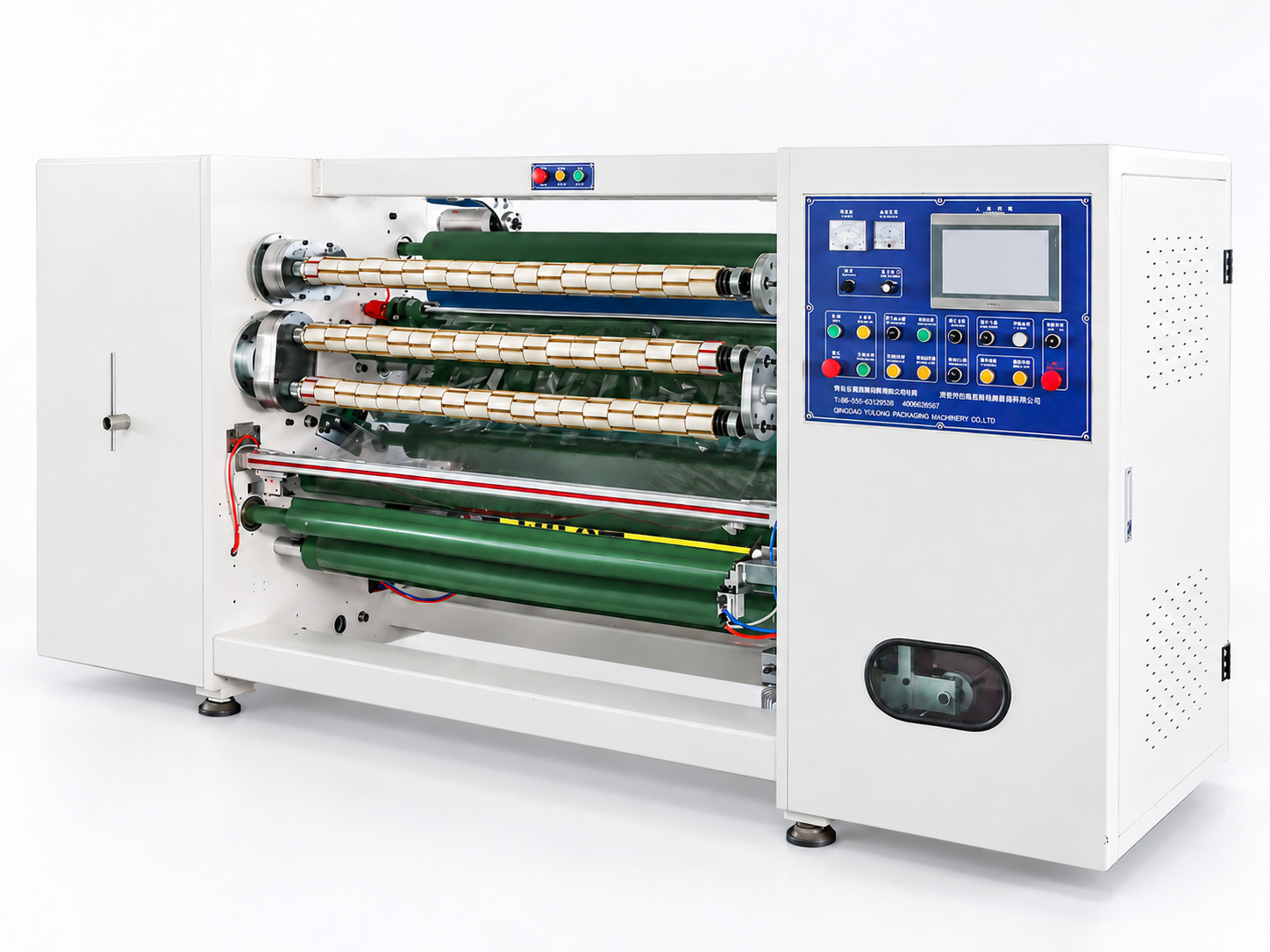
When purchasing a BOPP tape slitting machine, buyers often compare running speeds first. However, the rated metres per minute do not directly indicate how many acceptable finished rolls a factory can deliver in a day.
Fast running also requires shaft changes, paper-core loading, unloading and downstream packing to keep up. Before choosing equipment, identify where your production is actually losing time.
SHORT ROLLS MAKE CHANGEOVER TIME MORE IMPORTANT
At the same running speed, shorter finished rolls reach their target length sooner, so changeovers happen more frequently.
If every winding cycle is followed by a wait for manual unloading, core loading and restarting, increasing the speed simply brings the next waiting period forward.
When comparing semi-automatic and automatic slitters, review the complete sequence: which steps are automatic, which still need an operator, and whether the next set of rewind shafts can be prepared in advance.
Clarify what “non-stop shaft changeover” means. Continuous changeover at the rewind end does not mean that jumbo-roll replacement, threading and all auxiliary operations require no stops.
HIGH SPEED STILL NEEDS CONSISTENT FINISHED-ROLL QUALITY
Tape production does not end when a jumbo roll has been slit and rewound. Finished rolls must also meet requirements for width, length, end-face quality and winding firmness.
Poorly matched unwind and rewind control can lead to inconsistent roll quality. A machine may run fast briefly, but sorting, rework or scrap will still reduce saleable output.
For an acceptance trial, use material and finished-roll specifications close to your actual orders. Observe winding from the start through to a nearly full roll, rather than judging the machine from a short high-speed video.
DOWNSTREAM OPERATIONS CAN ALSO LIMIT OUTPUT
After slitting, rolls still need unloading, arranging, packing and boxing. If these operations cannot keep up, the slitter may have to wait.
Before investing in more automation, record waiting time during a shift:
• Time spent waiting for paper-core loading and finished-roll unloading.
• Time spent changing jumbo rolls and adjusting product specifications.
• Stops caused by winding or slitting quality issues.
• Any backlog in downstream packing.
Once the main losses are clear, decide whether to upgrade the slitter or first improve core preparation, unloading or packing support.
SEND YOUR ACTUAL ORDER REQUIREMENTS WITH THE ENQUIRY
“I need a high-speed slitter” is not enough for a useful configuration recommendation. Share the jumbo-roll material, width, diameter and weight; typical finished-roll widths and lengths; core specifications; target output per shift; staffing; and packing method.
If you handle small batches and multiple formats, also explain how often specifications change each day. Ease of adjustment and changeover matters for this type of production.
ETIMING helps match tape slitting equipment and auxiliary systems to your jumbo rolls, finished-roll specifications and production workflow. Send your order requirements and a video of your current process so equipment selection starts with the production problem you need to solve.
View the Non-Stop OPP Tape Slitting Machine:
https://etiming.net/product/non-stop-opp-tape-slitting-machine?lang=en-us