When Should You Replace a Three-Hole Slitter Blade? Check the Cut Edge
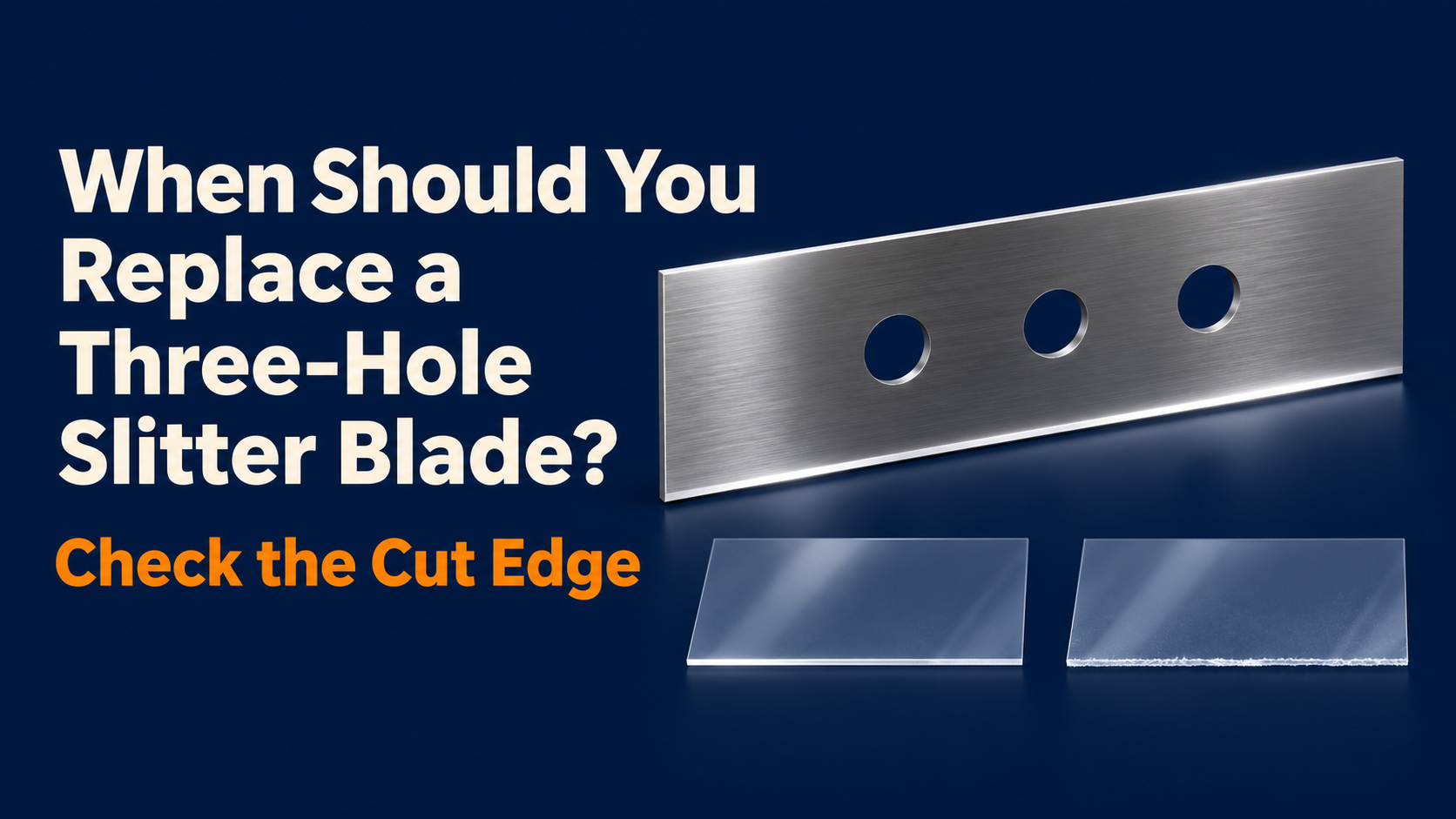
When slitting BOPP packing tape, the first rolls may have clean edges. Later, one strip may develop a rough edge or fine strands. If the defect keeps appearing at the same cut line, inspect the three-hole blade at that position.
1. How can you tell if a blade needs replacing?
The same cut line is rough on both adjacent rolls. Stop the machine according to its operating procedure and inspect the corresponding blade.
Adhesive has built up on the edge, with no visible damage. Clean the blade as directed by the machine manufacturer and run a test cut with material from the same batch. If the edge comes out clean, continue monitoring it.
The blade is chipped, cracked or bent. Replace it and inspect the edges on the test rolls.
The edge is still rough after cleaning, with no visible damage to the blade. Check how the blade is mounted, then test a new blade of the same specification. If the cut improves under the same conditions, replace the old blade.
2. When should you inspect the blades more often?
Inspect sooner if adhesive builds up faster after a change of jumbo roll batch, or if strands keep appearing at the same blade position after a similar run time. Record the batch, blade position, run time or length processed, and when the first defect appeared. Use that record to plan checks for the next run of comparable material.
3. Why is the edge still rough after a blade change?
If a new blade produces the same defect immediately at the same cut line, check the mounting and clamp at that position. If several cuts deteriorate together after a material or size change, check the incoming material, web path and tension.