Tape Slitting, Rewinding or Log Cutting? A Machine Selection Guide
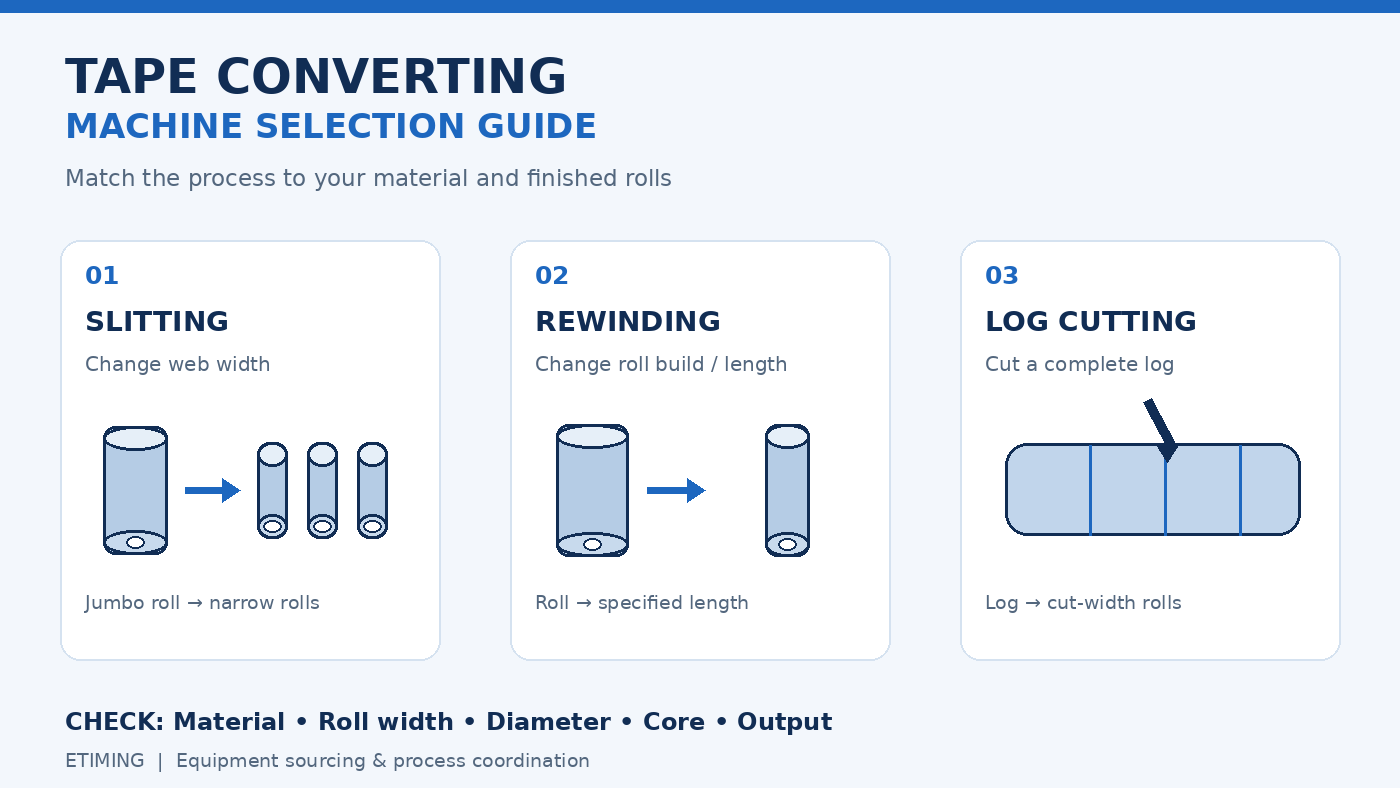
Start with the change you need to make to the roll: width, length, winding condition, or cut width on a complete log. A tape slitting machine cuts a moving web into narrower strips and rewinds them. In this workflow, a rewinder transfers the material onto another core while retaining the full web width and controlling roll length and winding condition. A tape log cutting machine cuts a complete log into narrower rolls. Material and finished-roll requirements determine the configuration; the words “automatic” and “high speed” are not enough to select equipment.
First Check: Is the Incoming Material Already Adhesive-Coated?
If you buy adhesive-coated tape jumbo rolls, your next steps may involve slitting, rewinding, log cutting and packaging. If you start with base film and adhesive, coating, drying and associated utilities require a separate review. This guide focuses mainly on converting coated tape rolls. For water-based coating requirements, review the water-based BOPP adhesive tape coating machine against your substrate and adhesive.
Tape Slitting, Rewinding and Log Cutting Compared
Tape Slitting Machine
Main task: Slit a moving wide web into narrower strips and rewind finished rolls.
Selection details: Jumbo-roll width and diameter; finished width, length, core and diameter.
Tape Rewinding Machine
Main task: Transfer the full-width material onto another core and control roll length and winding condition; confirm inspection functions separately for the selected configuration.
Selection details: Material construction, incoming and finished rolls, target length and required inspection method.
Automatic Tape Log Cutting Machine
Main task: Cut a complete material log into rolls of the required width.
Selection details: Log length and diameter, core ID, cut width, thickness, adhesive characteristics and edge requirements.
These processes may work together, or your project may need only one of them. If finished width must change after rewinding, confirm the additional cutting step. Rewinding and cutting a complete log are different operations.
Choose the Next Step for Your Tape Product
BOPP Carton-Sealing Tape: Check Finished Length and Diameter
Standard small rolls and long machine-packing rolls can require different winding ranges, changeover workflows and downstream handling. Machine-packing rolls must also match the customer's case-sealer core and diameter limits. Roll length alone is not a sufficient specification.
Review automatic labeling, shaft change and finished-roll requirements on the fully automatic BOPP tape slitting machine for large rolls. For long machine-packing rolls, review the dual-motor BOPP tape slitting machine. Confirm each model separately; do not apply the specifications of one machine to another.
Masking and Other Tapes: Confirm Rewinding or Log Cutting
Specify the backing, total thickness, adhesive system and any release paper or film. For winding requirements, review the automatic dual-shaft tape rewinding machine. For cutting complete logs into narrow rolls, review the four-shaft automatic tape log cutting machine. Material suitability, cut width and edge quality require confirmation against samples and finished-roll requirements.
Self-Adhesive Fiberglass Mesh Tape: Review the Custom Process
The mesh construction and finished product affect winding, cutting and inspection requirements. Read the mesh tape rewinding and cutting selection guide. The associated machines are custom versions with reference specifications, not a general processing guarantee for other materials.
How to Compare Two Machine Quotations
Ask suppliers to quote against the same material and finished-roll specification. Compare effective working width, unwind and rewind ranges, core sizes, shaft change and roll handling. Identify the included functions, optional equipment and material proposed for the trial.
Maximum mechanical speed is not daily deliverable output. Allow for roll changes, core preparation, setup, finished-roll checks and packaging. Review tape slitting speed versus actual daily output before deciding which process needs improvement.
Send These Details with Your Inquiry
- Material name, backing, adhesive system, total thickness, photos or samples.
- Incoming web width, roll diameter, weight and core inside diameter.
- Finished width, roll length, permitted outside diameter and core requirements.
- Target output per shift, common formats and changeover frequency.
- Your current winding, cutting, unloading and packaging workflow, and the problem you want to solve.
- Power supply, available space and any loading or roll-handling requirements.
If specifications are incomplete, start with incoming and finished-roll photos. Separate known dimensions from items still needing confirmation. ETIMING helps match equipment and supporting processes to the application; the confirmed technical proposal defines suitability and supply scope.
Purchasing Questions
Can one machine process every type of tape?
No. Backing, adhesive, thickness, liner construction, roll dimensions and edge requirements affect suitability. Confirm the actual material rather than relying on the generic equipment name.
Does “surface inspection” mean automatic detection of every defect?
No. Define the defects, inspection method and acceptance requirements, then confirm the included detection functions. Rewinding, web guiding and length counting alone do not establish complete automatic defect detection.
Do identical finished dimensions always mean the same configuration?
No. Material, adhesive, winding quality, changeover workflow and output also matter. Compare quotations against the same operating requirements.
Should I select a machine before confirming the product specification?
Define the target material and main finished formats first, then match equipment to them. Use existing orders or samples during configuration discussions and trial acceptance whenever available.